SUSTAINABLE DEVELOPMENT GOALS
SDG 13: CLIMATE ACTION
“Climate change is a crisis that will affect every part of society, and every country. Universities need to be at the forefront of action to reduce the impact of climate change, especially amongst the poorest who will be the most affected.”
(THE Impact Rankings)
Low-carbon energy use
Low carbon energy tracking
Low carbon energy tracking
Low carbon energy tracking is part of implementing the Green Campus program at IPB University. IPB, in collaboration with the Bogor city government and NIES Japan, and Fujitsu, has built a monitoring system for emissions and energy use. The result of the tracking activities was used to analyze the trend of emissions in the energy and transportation sector, as presented in the following report.
Based on the Green Campus document, IPB conducts monitoring, and evaluation activities to determine the success in implementing and achieving the Green Campus targets. Monitoring and evaluation are carried out through measurable components, i.e. implementation of routine programs, fulfillment of performance indicator targets, and fulfillment of sustainability aspects (page 127).
Environmental education measures
Local education programmes on climate
Climate Action Plan, shared
Co-operative planning for climate change disasters
Inform and support government
Environmental education collaborate NGO
Commitment to carbon neutral university
Local education programmes on climate
IPB, through the Department of Geophysics and Meteorology, has an undergraduate program in Applied Meteorology and master’s and doctoral programs in Applied Climatology. Activities and learning curricula of the study programs directly address applied climate science, covering climate change vulnerability, impact risk, adaptation, and mitigation assessments.
Concerning increased capacity in disaster risk reduction, IPB collaborates with several universities in Europe and Asia in the UN4DRR consortium. During an online meeting held on 23 June -2 July 2020, the consortium decided to compile the learning program for 6-course syllabuses related to Disaster Risk and Management.
IPB held the summer course program with the topic “Reducing Carbon Footprints: from Individual to Global Actions”. It was conducted online for 16 days, on November 20th -December 5th, 2020. This activity is integrated into IPB Courses claiming 90 learning hours equivalent to 3 credits.
Climate Action Plan, shared
In collaboration with the government of Palembang City (South Sumatera), IPB University, through the Centre for Climate Risk and Opportunity Management in Southeast Asia Pacific (CCROM-SEAP), embodies the Pilot Project of Climate Change Action Plan in Palembang City. The United Cities support this program and Local Governments Asia Pacific (UCLG ASPAC).
Not only in Palembang, the program also developed climate change mitigation and adaptation action plan in four other cities, i.e. Denpasar, Malang, Makassar, and Depok.
Co-operative planning for climate change disasters
IPB University and the IPB University Alumni Association (HA) received an award from the National Disaster Management Agency (BNPB) for the Education World Category, Foundation that has participated in national disaster management.
IPB, through the LPPM IPB Disaster Study Center, has collaborated with the Indonesian government through the National Disaster Management Agency (BNPB) to stimulate the recovery of community economic activities disrupted by the disaster. Implementing this activity is expected to improve the community’s welfare. It is one of the efforts to reduce the disaster risk index, especially in post-disaster areas.
Our lecturer, Professor Bambang Hero Sahardjo, from the faculty of Forestry, has been serving as coordinator of the UNISDR Regional Southeast Asia Wildland Fire Networks.
Inform and support government
IPB supported the government in local climate change disaster/risk early warning and monitoring by developing a disaster prevention dashboard system. IPB developed this system in collaboration with the National Disaster Management Agency (BNPB).
IPB has developed a prototype of smart system technology for assessing investment feasibility in coastal areas and small islands based on disaster risk as part of the adaptation of revolution 4.0 to support the policy of integrated electronic business licensing services. The system is implemented in Kepulauan Seribu Island Regency, Jakarta (page 4).
Environmental education collaborate NGO
Through the Zurich Flood Resilience Alliance program, IPB, in collaboration with Mercy Corps Indonesia, is working with the Pekalongan City and Regency governments to promote evidence-based policymaking and program development related to climate adaptation.
IPB, in collaboration with ICCO and other consortium members from the university and private companies, is working on two projects, i.e. G4AW Smartseeds and G4AWSpiceUp. The Smartseeds project developed an information service to support 100.000 vegetable farmers through Sipindo App (Ev. 2), while the SpiceUp project provides geodata-based information services to support 100.000 pepper farmers through SpiceUp App. Both projects provide exclusive and customized location-based services for vegetable and pepper farmers to boost the productivity and sustainability of the products to contribute to poverty reduction and increased resilience of the farmers, particularly related to climate change.
Commitment to carbon neutral university
Donec blandit consequat nibh at euismod. Aenean ante metus, maximus et eleifend sed, auctor at diam. In hendrerit accumsan nunc ac malesuada. Donec luctus arcu ut dictum commodo. Integer sit amet consectetur augue, quis mollis justo. Nam non eros faucibus, tristique enim id, vehicula orci. Morbi eleifend dui in tellus viverra, et malesuada enim elementum. Aliquam accumsan vitae tellus sit amet gravida. Donec id magna nec nibh eleifend sollicitudin. Pellentesque interdum mi at ipsum ullamcorper gravida. Nullam metus lacus, porttitor eget congue a, consectetur ac ex. In ligula augue, cursus eget elementum non, accumsan id tortor.
Lorem ipsum dolor sit amet, consectetur adipiscing elit. Etiam rutrum porttitor augue ornare rhoncus. Curabitur iaculis tortor a urna viverra sagittis. Nulla facilisi. In hac habitasse platea dictumst. Vivamus euismod eu nisi vel dignissim. Mauris eget ante gravida, aliquam lectus a, tristique elit. Praesent quis sapien purus. Fusce ac justo tellus. Suspendisse potenti. Etiam vel purus eu lectus porttitor dignissim vel id diam. Sed at sapien molestie, fermentum elit et, aliquet metus. Morbi ex quam, cursus vitae lectus gravida, venenatis gravida lacus. Praesent cursus eleifend lacus, vulputate commodo magna volutpat sed. Cras ex nisl, rhoncus a metus quis, efficitur mattis tellus.
Praesent lobortis tortor nec lorem iaculis commodo. Donec interdum euismod mi, et finibus tortor dictum sed. Quisque lobortis rutrum orci. Sed nec mi non risus efficitur blandit dapibus id enim. Cras neque sem, molestie eu tellus nec, ultrices volutpat lacus. Proin porttitor mi vitae eros euismod, eget consectetur ipsum elementum. Ut justo dolor, dapibus in gravida nec, placerat a tortor. Donec convallis, nisi nec finibus finibus, mauris sapien cursus lacus, et blandit nunc lorem a nibh. Nulla quis sodales lectus, ut congue risus. Donec finibus consequat lectus in iaculis. Integer dignissim eros nec urna maximus, a aliquet orci malesuada. Quisque posuere orci mollis, semper quam eu, elementum lectus. Etiam dapibus sit amet lacus porta viverra. Vestibulum nec hendrerit diam, non mollis ligula. Mauris aliquam diam bibendum metus dictum, sed porttitor nibh congue. Vivamus suscipit mattis dolor fermentum laoreet.
Commitment to carbon neutral university
Commitment to carbon neutral university
Commitment to carbon neutral university
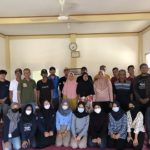
In 2020, IPB issued a policy related to the commitment to achieve carbon Neutral by 2030. This is stated in the Copy of the Rector’s Decree No. 298/IT3/LK/2020 concerning the Commitment of Institut Pertanian Bogor to Achieving Carbon Neutral in 2030. Previously, in 2019, IPB conducted a Carbon Footprint study intended as part of IPB University’s efforts to implement Green Campus programs. This study’s results are one of the important considerations in determining Carbon Neutral commitments in the IPB campus environment.
Based on the policy of the Rector’s Decree no. 298/IT3/LK/2020, IPB is committed to achieving Carbon Neutral in the campus environment by 2030. This commitment will be achieved in stages through:
- Increasing the use of bicycles, and electric vehicles, using buses, and freeing roads from motorcycles and cars to reduce the use of fuel oil on campus
- Allocate sufficient human, material, and funding resources to implement Carbon Neutral in 2030
- Continuously disseminate the 2030 Carbon Neutral commitment to the academic community and communities around campus
- Prepare a carbon balance assessment comprehensively as a basis for evaluating progress towards achieving the Carbon Neutral target
- Compiling a roadmap as the basis for achieving Carbon Neutral targets by 2030.
SDG 13 IN NUMBER
66,213 GJ
Total energy consumption
111 GJ
Electricity from low-carbon sources
0.002
Proportion of electricity from low-carbon sources
Select an image for which you want to see the achievement of the SDG indicators

RELATED NEWS
It seems we can’t find what you’re looking for.