SUSTAINABLE DEVELOPMENT GOALS
SDG 15: LIFE ON LAND
“This is the second of two SDGs that look at the broader ecosystem – the other being SDG 14: Life Below Water. Life on land is a precious resource – we need to ensure that it is passed on to future generations, at a time when loss of biodiversity is an increasing concern. Different universities will have responsibility for very different landscapes and the life within, but all have a responsibility as stewards of their environment.”
(THE Impact Rankings)
Supporting land ecosystems through education
Events about sustainable use of land
Sustainably farmed food on campus
Maintain and extend current ecosystems’ biodiversity
Education programmes on ecosystems
Sustainable mgt of land for agriculture and tourism
Events about sustainable use of land
IPB University supports and organizes many events to promote conservation and sustainable utilization of the land, including forest and wildland, such as:
- Animal Love Day: Our Alumni Releases Wild Animals and Plants Trees
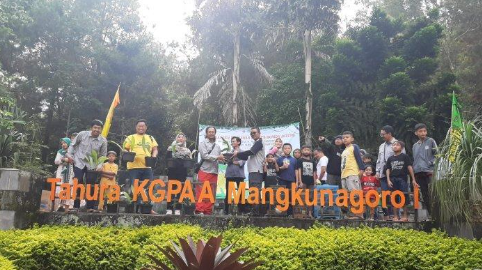
In commemoration of National Puspa and Animal Love Day on November 5, 2022, the Alumni Association of the Faculty of Forestry and Environment IPB (HAE-IPB) Central Java Regional Commission carried out wild animal release and tree planting activities as well as a meeting with HAE IPB Central Java Regional Commissioners, which is located in the KGPAA Mangkunagoro I Karanganyar Grand Forest Park.
<<see the details>> - Planting and Tree Adoption in Campus Forest Park
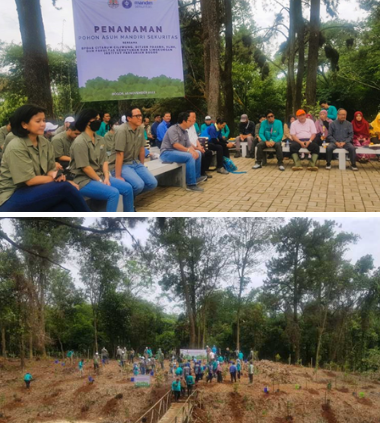
This main program is a joint effort between IPB University, PT. Mandiri Sekuritas, and BPDAS Citarum Ciliwung to contribute to and participate in conserving and supporting environmental sustainability, not only by planting trees but also by maintaining them to ensure long-term benefits for the environment and surrounding communities. Approximately 400 tree species, including rambutan, jackfruit, avocado, matoa, and durian trees, have been planted. It is part of the conservation and biodiversity efforts to improve environmental quality, provide benefits to the community, and mitigate climate change. <<see the details>> - IPB Students Lead a Conservation conservation project in Karangjaladri
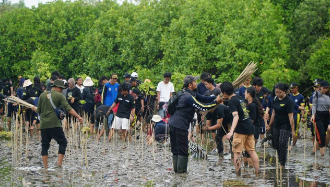
Students from IPB University lead mangrove conservation projects in Desa Karangjaladri, West Java. The goal of this project is to maximize the potential of the mangrove ecosystem to improve the community economy in Desa Karangjaladri. This activity also includes educating the community to care more about protecting existing mangrove habitats so that the community can benefit from their ecological and economic benefits. Aside from that, this project gave Desa Karangjaladri 2,500 mangrove plants.
<<see the details>> - Fauna Conservation Union Implements Social Conservation Program
IPB University arranged a discussion with environmental experts on World Environment Day concerning natural resource management and conservation. “Only One Earth” is the theme of this year’s World Environment Day. This concept expresses the earth’s situation, which has only one existence and must be saved. According to IPB environmental experts, the growing human population on Earth necessitates extra sources of energy, housing, and food, which impacts natural resource management, which must be more optimal. However, the sustainability element of natural resource management must also be considered so that natural resource management, particularly in Indonesia, is in accordance with conservation. IPB experts agree that Indonesia’s biodiversity must be utilized and maintained through bioprospecting. <<see the details>>
Various Activities of Biodiversity and Conservation at IPB University
<<see more>>
Sustainably farmed food on campus
IPB has a commitment to provide food on campus that is sustainably farmed, which has been stated in Rector Decree No.133/2020. IPB ensures that all canteens on campus use raw materials from sustainable agriculture and livestock and fishery activities that comply with animal ethics, as well as minimal negative effects on the environment. It refers to Rector Decree No. 133/2020, point J, page 2.
<<Rector’s Decree No.133/IT3/LK/202: Commitment to Achieving SDGs>>
Rector’s Policy on Healthy and Sustainable Lifestyle (article 5, page 4) also clearly states that all canteens on campus, including food on campus, must be sustainably farmed.
<<Circular Letter on Healthy and Sustainable Lifestyle>>
Besides that, IPB University is committed to reducing energy and water wastes, as well as landfills on the campus, through water reuse, liquid waste and waste management, and natural resource utilization by the reuse-recycle principle, as well as the plastic waste reduction that is stated in Rector Decree No. 133/2020, points h–n, page 2, as a part of supporting sustainable farming.
<<Rector’s Decree No.133/IT3/LK/202: Commitment to Achieving SDGs>>
Agribusiness and Technology Park (ATP) of IPB University is certified by the Indonesian National Standard on Organic Vegetables
ATP (Agribusiness and Technology Park) IPB has been certified by the Indonesian National Standard (Sustainable Development Services) on Organic Farming System (SNI 6729-2016). This standard is the Indonesian organic farming standard that sets the requirements for the organic farming production system on agricultural land, processing, storage, transportation, labeling, marketing, production facilities, allowed additives, and processing aids.
<<see the details>>
ATP has been listed as one of the certified business actors (p. 1, no. 10). ATP (Agribusiness and Technology Park) IPB currently has 185.100 m2 of organic land that collaborates with 52 local farmers from various locations to produce superior organic produce. These products have been distributed to the modern market, supermarkets, and online shops.
<<See more about ATP IPB University>>
<<SNI Organik 6729:2016>>
IPB University Issues Ecolabelling Canteen
As a part of its commitment to ensure that food at IPB University is sustainably farmed, IPB University provides and manages an ecolabelling canteen that provides healthy, clean, and safe food. This eco-label is set on eco-friendly canteens, which require all products to be based on natural resources and ecosystem preservation. This is stated in the Academic Text and Implementation of IPB Green Campus 2019–2023. <<see the details>>
Maintain and extend current ecosystems’ biodiversity
IPB is strongly committed to the preservation, maintenance, and extension of existing ecosystems, biodiversity, and ecosystems under threat. This commitment is reflected in conducting many activities, such as scientific research, reports, and actions to reduce biodiversity loss and maintain endangered flora and fauna, as well as ecosystem functions. Those activities have collaborated with relevant stakeholders.
Endangered Species Conservation (Assisted Reproductive Technology)
IPB signed a memorandum of understanding (MoU) on “Accelerating the Development of Science and Education for Conservation of Endangered Species with the Application of Assisted Reproductive Technology (ART) and Biobank” with the Leibniz Institute for Zoo and Wildlife Research (Leibniz-IZW), Germany. Currently, the Sumatran rhino population is only found in Indonesia, and the current Sumatran rhino population is estimated to be less than 50 rhinos, including the rhinos in the Sumatran Rhino Reserve (SRS) in Way Kambas National Park, Lampung, and SRS Kelian, West Kutai in East Kalimantan. The slow rate of reproduction of the Sumatran rhinoceros means that the Sumatran rhinoceros will experience extinction if appropriate measures are not taken to restore genetic resources both in nature and in captivity. One way to protect and secure wild animal genetic material is through the application of assisted reproductive technology (ART) and biobanks. The collaboration between IPB University and IZW can strengthen the formation of the “Center for Assisted Reproductive Technology (ART) and Biobank for Sumatran rhinos and endangered wild animals. In addition, the application of this technology can save and store genetic resources in the form of gametes (egg and sperm cells), fibroblast cells, stem cells, and embryo production to produce new individuals of Sumatran rhinos and other endangered wild animals.
<<Development of Rhino’s Biobank>>
<<IPB and Germany Join Forces to Save Biodiversity>>
IPB Collaborates with France to Save Forests and Peatlands
Regional Fire Management Resource Center-Southeast Asia (RFMRC-SEA) IPB collaborates with the Ambassadors of France and Timor Leste in Indonesia about the Rainforests and Peatlands Fires Center of Excellence. This collaboration aims to support educational and training capabilities based on development science in the field of prevention, contingency, and control of forest and peatland fires.
<<see the details>>
IPB University carries out activities in an effort to maintain animal and plant ecosystems that are threatened with extinction (Sustainability Report Biodiversity and Conservation, p. 12–15)
<< IPB University Biodiversity and Conservation Report 2022>>
Education programmes on ecosystems
IPB University offers various educational programs on ecosystems for local, national, and international communities with interesting and beautiful scenes. Those educational programs are conducted inside and outside campus, such as conservation education for the local communities, summer courses for international students, and educational facilities in IPB for the communities.
International Summer Course on World Forestry Challenges
Faculty of Forestry and Environment (FAHUTAN), IPB University held the 3rd International Summer Course on Forestry and Environment entitled “Sustainable Forest and Environmental Management in the New Normal Era: Conservation, Biodiversity, and Culture (ForSC2022)”. Conducting this summer course can increase the role and participation of the world’s young generation in managing and conserving forests. The summer course facilitates the younger generation to increase their knowledge regarding ecosystem management, conservation, biodiversity, and culture by sharing with international speakers and students.
<<see the details>>
Conservation Education and Social Service in Cinagara Village
The UKF again implemented the 2022 Social Conservation Program (SCP), which was carried out in Cinagara Village, Caringin District, Bogor Regency, at the very edge of Cinagara Village, which directly borders the Curug Cikarcak ecotourism area and Gunung Gede Pangrango National Park. UKF IPB University delivered several materials to the local communities, such as understanding flora and fauna, types of waste, and the environment through singing, the use of media such as videos and pictures, and games. Another activity is social service by carrying out clean-ups around the Curug Cikarcak ecotourism area. The ecotourism condition of Curug Cikarcak is still very natural, but it is very unfortunate that there is a lot of plastic waste, especially along the route to Curug Cikarcak. Apart from carrying out clean-up, UKF IPB University also tries to record the waste obtained by classifying it into several categories. “The waste category includes plastic, metal, glass, rubber, cloth, etc. <<see the details>>
Agroedutourism (AET) IPB University
Agroedutourism programs (AET) are provided for the public. Educational programs are available in the Biopharmaceutical Medicinal Plant Installation Garden, Insect Garden, and Cikabayan Garden. The agroedutourism visit is an educational tour package that introduces the horticultural agribusiness management model carried out by Agriculture and Technology Park IPB. There are various packages offered, ranging from walking and identifying species in the garden, to practicing directly the process of cultivating plants. It also provides training for actors and prospective agribusiness actors or personnel who are directly and indirectly related to agribusiness activities.
<<About Agroedutourism, IPB University>>
<<Agrouedutourism IPB, Interesting Educational Agricultural Tourism>>
<<Agroedutourism package>>
Primate Study Center IPB University Educates Ecosystem Conservation
Primate Animal Study Center IPB University educated the local community in Cikiruh Wetan, Banten to conserve their ecosystem. This program was held at a semi-natural breeding facility for long-tailed monkeys (Macaca fascicularis) on Tinjil Island, Banten. <<read more>>
IPB has organized several ecosystem education programs for local and national communities, namely the Gunung Walet Education Forest (Page 12), Wildlife Campaign (Page 14), and other programs listed in the Sustainability Report Biodiversity and Conservation.
Sustainability Report
IPB has organized several ecosystem education programs for local and national communities, namely the Gunung Walet Education Forest (Page 12), Wildlife Campaign (Page 14), and other programs listed in the Sustainability Report Biodiversity and Conservation.
IPB University Biodiversity and Conservation Report 2022
Sustainable mgt of land for agriculture and tourism
Educate Community about PGPR for Sustainable Agriculture
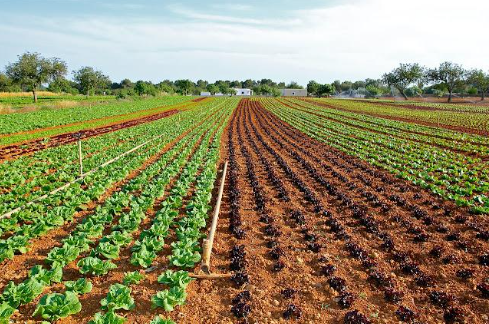
IPB students carried out a capacity-building program for farmers in Desa Plabuhan to use PGPR (Plant Growth Promoting Rhizobacteria). The use of PGPR encourages sustainable agricultural practices because it helps enrich the soil with natural substances and helps increase nutrient absorption by the roots.
<<see the details>>
International Conference on Modern and Sustainable Agriculture
Faculty of Agriculture, IPB University, in collaboration with The International Society for Southeast Asian Agricultural Sciences (ISSAAS) and the Indonesian Agronomy Association (PERAGI), held the International Conference on Modern and Sustainable Agriculture (ICOMSA). This activity was carried out to discuss various aspects related to modern and sustainable agricultural science.
<<see the details>>
International Conference on Modern and Sustainable Agriculture
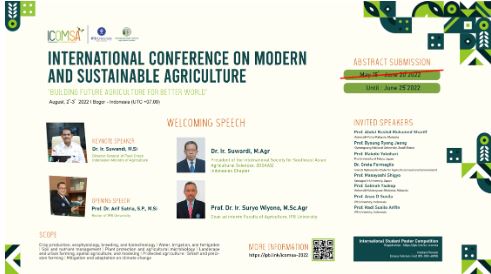
Faculty of Agriculture, IPB University, in collaboration with the International Society for Southeast Asian Agricultural Sciences (ISSAAS) and the Indonesian Agronomy Association (PERAGI), held the International Conference on Modern and Sustainable Agriculture (ICOMSA). This activity was carried out to discuss various aspects related to modern and sustainable agricultural science. <<see the details>>
Training for Sustainable Coffee Plantation
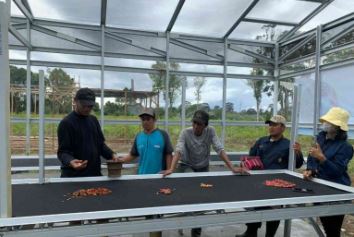
IPB students, through the One Village, One CEO (OVOC) program, provide training for coffee farmers in Tumbang Baloi Village, Central Kalimantan. This training includes sustainable coffee cultivation techniques, post-harvest processing of coffee, and making semi-liquid organic fertilizer. IPB students also train farmers in coffee seeding and maintenance according to Good Agricultural Practice (GAP) standards and post-harvest processing of coffee according to International Coffee Cupping Standards.
<<see the details>>
Another educational program on sustainable management of land for agriculture and tourism is on Page 11 of the Sustainability Report 2022 on Biodiversity and Conservation.
<<IPB University Biodiversity and Conservation Report 2022>>
Supporting land ecosystems through action
Sustainable use, conservation and restoration of land
Monitoring IUCN and other conservation species
Local biodiversity included in planning and development
Alien species impact reduction
Collaboration for shared land ecosystems
Sustainable use, conservation and restoration of land
IPB University commits to ensuring the conservation, restoration, and sustainability of terrestrial ecosystems, particularly forests, mountains, and drylands.
- Commits to promoting biodiversity conservation within the campus area
Through Rector Decree No. 133/IT3/LK/2020 on Commitment in the Achievement of Sustainable Development Goals (poin r), IPB University commits to promoting biodiversity conservation within the campus area and considers this aspect in every construction plan.
<<Rector Decree No. 133/IT3/LK/2020, point r>> - Declaration as Biodiversity Campus
Since 2012, IPB has decided to become a biodiversity campus. Several policies have already been stated in the Policy Brief about Biodiversity at IPB University.
<<Policy Brief – Biodiversity at IPB University>> - Gunung Walat Educational Forest
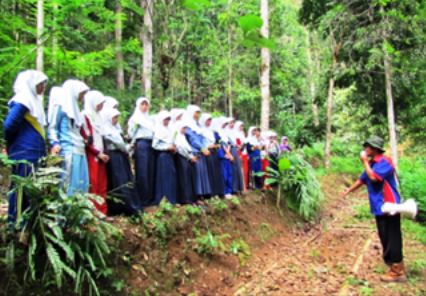
For a long time, the university policy to conserve, restore, and promote sustainable use of forests has been set in the vision and mission of the development and management of the Gunung Walat Educational Forest.
Vision: The realization of the Gunung Walat Educational Forest (HPGW) as an international standard implementation medium for the Tridharma of the Higher Education Faculty of Forestry, IPB, for sustainable forest management.
Mission:
-Realizing sustainable forest management in the HPGW area.
-Realizing the implementation of science and technology education and research in effective forest and environmental resource management.
-Building partnerships between HPGW and other parties as a tangible form of community service. - Establishes Campus Forest Park to Conserve Biodiversity
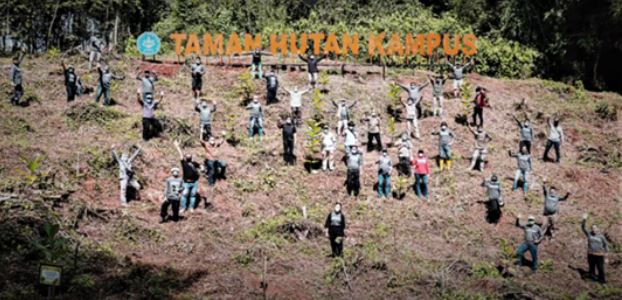
The establishment of the campus forest garden aims to conserve flora and fauna, specifically dryland species. Planting various flora species can be a collection and habitat of fauna/animal species. Management of the campus forest garden is conducted under the Department of Forest Resource Conservation and Ecotourism, Faculty of Forestry and Environment.
<<Development of Campus Forest Park at IPB University>>
Monitoring IUCN and other conservation species
IPB University complies with international conventions and national regulations as to monitoring and protecting IUCN red-listed species as well as nationally listed protected species, especially related to the IPB University activities.
- IPB University Refers to Occupational, Environmental Health, and Safety Management System (SMK3L)
IPB University has an Occupational and Environmental Health and Safety Management System (SMK3L) to protect flora and fauna species in areas affected by the operation of activities (page 1, sub-section 1.1, point d). In work environment management, IPB University monitors flora and fauna (page 2, sub-section 1.2, point b-II-(1)). The program and target for this aspect have been set up in these guidelines (page 4).
<<Occupational and Environmental Health Policy>> - Commitment in Protected Species Conservation
Through Academic Senate Regulation No. 36/2020, IPB University commits to conserving natural ecosystems, including protected and non-protected ones on campus (page 7, point 2F).
<<Academic Senate Regulation No. 36/2020>>
We also monitor and conserve our biodiversity in the campus area through the Biodiversity Campus Policy since 2011, as stated in IPB University’s Policy of Biodiversity’s Innovation for Eco-Edutourism. Biodiversity monitoring has been conducted for the last 20 years in the campus area. The monitoring covered habitat types, a list of species, and the distribution of all taxa, including mammals, birds, amphibians, reptiles, butterflies, and plants. The long-term biodiversity monitoring has produced a comprehensive data set and a list of flora and fauna in the campus area that is updated every year. A total of 22 species of mammals, 99 species of birds, 12 species of amphibians, 38 species of reptiles, 128 species of butterflies, 173 species of woody plants, 40 species of bamboos, and at least 127 species of medicinal plants have been recorded in the IPB University campus area.
Through student activities (Himakova and Fauna Conservation Union), we routinely monitor and conserve flora and fauna on campus and outside campus. Monitoring fauna on our campus includes mammals, fish, insects, herpetofauna, and reptiles.
<<Himakova – Student Union on Conservation>>
<<UKF – Student Union on Fauna Conservation>>IPB University also monitors IUCN and other species through its primate research center. In 2021, the Primate Research Center Team will monitor the population and carrying capacity of the Long-Tailed Monkey Habitat on Tinjil Island. Tinjil Island is a Conservation Animal Laboratory developed by the Primate Study Center and has two main activities: semi-natural captive breeding of long-tailed monkeys (Macaca fascicularis), ex-situ captivity of tarsiers (Tarsius spectrum and T. bancanus), and slow lorises (Nycticebus coucang).
<<Monitoring on Long Tailed Monkey>>
<<Tinjil Island – Conservation Laboratory>>
Local biodiversity included in planning and development
IPB includes local biodiversity in any planning and development of the campus (p. 87–89), such as green building construction.
<<Academic Paper: Green Campus Implementation 2019-2023>>
IPB also clearly stated to include local biodiversity in any planning and development process on campus (point r, page 2).
<<Rector’s Decree No. 133/2020: Commitment on Achieving SDGs>>
One example of the program implementation is the PPLH (Environment Research Center) IPB University’s activity in reviewing the results of environmental studies around the construction site of a multi-tenant building, Science Techno Park (STP), IPB Taman Kencana. The results of the environmental study cover all environmental components, namely geo-physical-chemical, biological, socio-economic, and cultural as well as public health and environmental health.
<<Environmental Studies on Building Construction>>
Alien species impact reduction
IPB University ensures there are no alien species or invasive species on campus. It refers to Rector Decree No. 133/2020 (point p, p. 2).
<<Rector’s Decree No. 133/2020: Commitment on Achieving SDGs>>
The Green Campus Policy of IPB University follows the environmental regulations on the national and international level (UNEP) to manage and maintain the campus, specifically on maintaining species diversity by selecting indigenous species and reducing alien species (p. 27).
<<Academic Paper: Green Campus Implementation 2019-2023>>
Collaboration for shared land ecosystems
IPB University, as a body, collaborates with the local community in efforts to maintain shared land ecosystems.
- Community Service through Gunung Walat University Forest (GWUF)
IPB University collaborates with local communities in the Gunung Walat area to maintain water sources through tree-planting activities. Local communities have greatly contributed to maintaining the forest in good condition, and there appeared to be at least seven water springs that flowed the whole year, fulfilling the needs of local people and irrigating agricultural lands and wetland paddy fields. Preventing logging and thinning activities in GWUF allows the structure of the forest to develop, resembling that of a natural forest (close to a natural forest). - Mangrove Restoration in Bengkalis
The Indonesian Peat and Mangrove Restoration Agency accepts IPB University’s proposal for mangrove development in Bengkalis. Three main activities will be carried out, namely the development of mangrove ecotourism, centers for processing agricultural and fishery products, and centers for processing agricultural products. Farmer and Entrepreneur Clinic facilities are also provided so that after this activity, the peat care villages in 19 villages will continue to communicate with experts at IPB University. For ecotourism, a policy study of the culture, nature, and heritage of the village will be conducted. Destination development, branding, and marketing will also be carried out to support ecotourism sustainability.
- Campus Forest Park
The Faculty of Forestry and Environment (Fahutan) at IPB University initiated the construction of a campus forest park. Campus Forest Park is in the Cikabayan block, Dramaga Campus of IPB University, Bogor. In 2018, we started, step by step, the construction of the campus forest park by inviting several parties to participate. Such as students, educators, and private parties with corporate social responsibility (CSR) funds. This campus forest park is not only beneficial for students or researchers but also for the community in general as a means of direct learning about conservation and how environmental service management can develop and benefit.
We have numerous strong partnerships with other academic institutions, national and regional governments, NGOs, and private These partnerships are important to constructing, maintaining, and implementing knowledge to support the sustainable use of land ecosystems (terrestrial and forest), combat desertification, halt and reverse land degradation, and halt biodiversity loss. Learn more about the various centers, institutes, and initiatives that are central to our research programs.
- Research Center
a. Center for Environmental Research <<read more>>
b. Center for Agricultural and Rural Development Studies <<read more>>
c. Center for Regional Systems Analysis, Planning and Development <<read more>>
d. Primate Animal Study Center <<read more>>
e. Center for Tropical Horticultural Studies <<read more>>
f. Center for Tropical Animal Studies
Center for Climate Management, Opportunities and Risk for South-East Asia and Pacific (CCROM SEAP) <<read more>>
g. Mine Reclamation Study Center <<read more>>
h. Disaster Studies Center <<read more>>
i. Agrarian Studies Center <<read more>>
j. Center for Transdisciplinary and Sustainability Science <<read more>> - Prospective Research Collaboration in Life on Land
a. Land Cover Change Monitoring System <<read more>>
b. Ecological and Socioeconomic Functions of Tropical Lowland Rainforest Transformation Systems <<read more>>
Land-sensitive waste disposal
Water discharge guidelines and standards
Policy on plastic waste reduction
Policy on hazardous waste disposal
Water discharge guidelines and standards
IPB University has water quality standards and guidelines for water discharges (to uphold water quality to protect ecosystems, wildfires, and human health and welfare).
IPB University has set up water quality standards and guidelines for water discharges as part of the Green Campus Policy that follows national regulations for developing Green Campus Policy (page 108, “management sensitive water”) to manage the water on campus and also implemented ISO 17025 for water quality analysis in the laboratory (e.g., Department of Agroindustrial and Technology, Faculty of Agricultural Engineering and Technology; PROLING Laboratory at MSP Department, Faculty of Fisheries and Marine Sciences).
<<water quality standards and guidelines>>
- Standard Operational Procedure for Wastewater Management (IPAL)
A wastewater treatment plant (WWTP) is a structure designed to dispose of biological and chemical waste from a building that is treated using biotech and other supporting devices so that it is safe to be disposed of in the environment.<<Standard Operational Procedure: Wastewater Treatment Plant>>
- National Regulations
Water quality standards and guidelines for water discharges, as stated in the Environment and Forestry Ministry Regulation No. P.16 /MENLHK /SETJEN/KUM.1/4/2019 concerning Water Quality Standard (Ev 1, page 6).
- Academic Paper: Green Campus Implementation
IPB developed the Green Campus Policy (p. 108, “management of water sensitivity”) to manage the water on campus. <<see the details>>
- Commitment to Achieving SDGs
IPB University declared a commitment to achieving sustainable development goals (SDGs) through the Decree of the Rector of the Bogor Agricultural University No. 133/IT3/LK/2020. The decision includes a commitment to comply with government regulations regarding managing liquid waste.<<Rector’s Decree No. 133/2020: Commitment on Achieving SDGs>>
Policy on plastic waste reduction
IPB University has a policy to reduce plastic waste on campus through Rector Regulation No. 29/IT3/OT/2020, ch. 2, p. 5, Instructions for the Implementation of Waste Management in IPB University (p. 5, chapter II, “waste reduction”), and the Rector’s Decree number 133/IT3/LK/2020, point n, p. 2.
- Implementation of Waste Management at IPB University
IPB University implemented Rector Regulation No. 29/IT3/OT/2020 about implementing waste management to reduce plastic waste on campus. - Commitment to Plastic Waste Reduction
IPB University declared a commitment to achieving sustainable development goals (SDGs) through the Decree of the Rector of the IPB University No. 133/IT3/LK/2020. The decision includes a commitment to reduce the production of plastic waste.<<Rector’s Decree No. 133/2020: Commitment on Achieving SDGs>>
- Regional Regulation
IPB University, which is in the Bogor Regency area, is committed to following the Bogor Regency’s Regulation No. 13 of 2019 concerning reducing the use of plastic and Styrofoam.
<<Bogor Regency Regulation No. 13/2019: Reduction of Plastic and Styrofoam>>
- Campaign on Plastic Diet The orientation period for IPB students in batch 58, or entering 2021, has just finished, breaking the record for a plastic diet campaign involving 4,000 participants.
Policy on hazardous waste disposal
1. Policy on waste disposal management
IPB has issued a waste management policy for various types of waste disposal including hazardous waste to improve its management in all units at various levels in universities. Each unit within the university has to implement the zero waste policy, such as by reducing single-use items (such as plastic and styrofoam) and managing hazardous waste.
<<Hazardous waste disposal system>>
2. Commitment to implement standardized waste management
The commitment to implement waste management, including hazardous waste, under the standards set by the government, has been stated in the Rector’s Regulation Number 133/IT3/LK/2020.
3. Unit coordinator for campus waste management
The Directorate of Infrastructure, Facilities, and Security for the Campus Environment Units has a function to coordinate all waste management activities conducted by all units within the university. This task and function follow the regulations of the Board of Trustees number 06/MWA-IPB/P/2020 (P. 44, Part 9 Article 85).
Select an image for which you want to see the achievement of the SDG indicators
RELATED NEWS
It seems we can’t find what you’re looking for.