SUSTAINABLE DEVELOPMENT GOALS
SDG 17: PARTNERSHIP FOR THE GOALS
“Sustainable development is the responsibility of every part of society, across the world. It cannot be achieved without linkages, across the goals, but also between institutions, governments, companies, NGOs, and people.”
(THE Impact Rankings)
Relationships to support the goals
Relationships with regional NGOs & gov for SDG policy
Cross sectoral dialogue about SDGs
International collaboration for SDG
Collaboration for SDG best practice
Collaboration with NGOs for SDGs
Relationships with regional NGOs & gov for SDG policy
IPB University has direct involvement in, or input into, national government or regional non-government organizations’ SDG policy development – including identifying problems and challenges, developing policies and strategies, modeling likely futures with and without interventions, monitoring and reporting on interventions, and enabling adaptive management:
IPB Experts’ direct involvement in SDGs policy making
- Decree of Ministry of National Development Planning / National Development Planning Agency concerning the Indonesia Expert Team for the Implementation of Sustainable Development Goals 2020-2024.
- Decree of Ministry of Ministry of National Development Planning/National Development Planning Agency concerning Formation of the Implementation Team, Working Group and Expert Team for Sustainable Development Goals for 2017-2019 in Indonesia.
- Decree of the Central Java Governor No:523/18/2021 concerning Central Java demersal fisheries management working group 2020-2025.
- Decree of the Minister of Environment and Forestry No:SK.382/MenLHK/PHPL/HPL.1/6/2019 concerning Multi-Business Forestry Expert Team in Production Forest.
- Decision of the Chairman of the Commission on Biosafety of Genetically Engineered Products (KKH PRG) number: Kep-06/KKH PRG/10/2019 concerning changes in the composition of the technical team for biosafety of genetically engineered products (TTKH PRG).
- Presidential Decree of the Republic of Indonesia Number 50/M of 2018 concerning dismissal and appointment in membership of the commission on biosafety of genetically modified products.
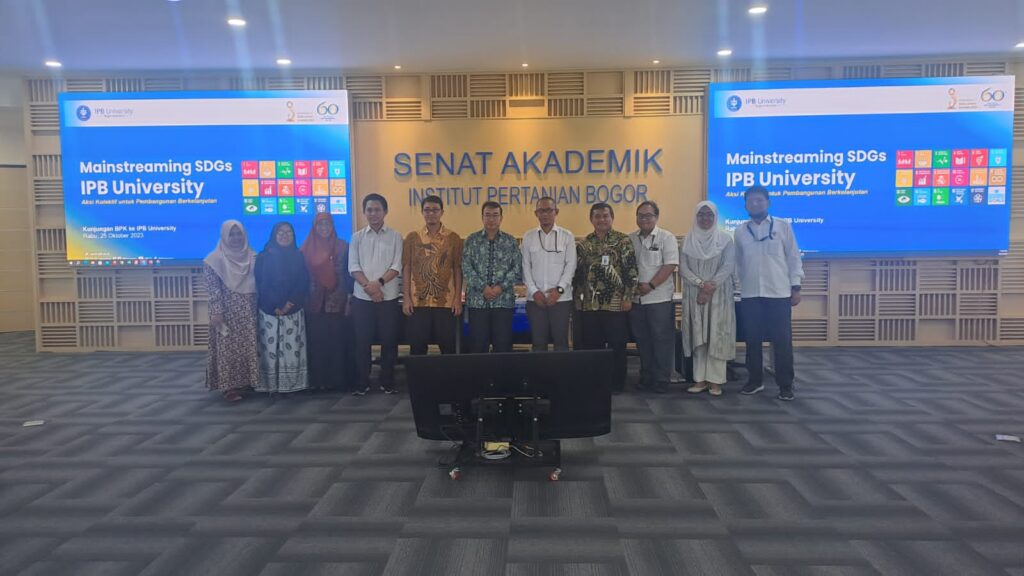
<<Providing recommendation for SDGs Indonesia>>
In addition to that, IPB University has also involved in several activities, as follows:
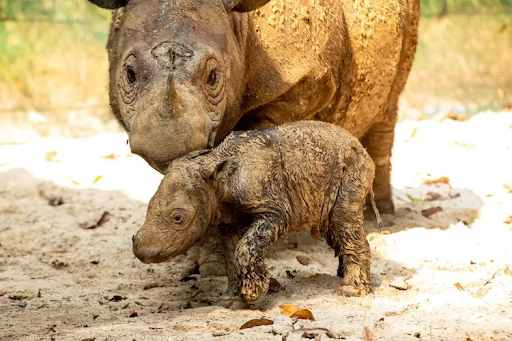
1. IPB University supporting the Birth of A Sumatran Rhinoceros In Way Kambas National
Dr. drh. Muhammad Agil, MSc.Agr from School of Veterinary and Biomedical Reproductive monitored the Birth of Rhinoceros Calves in Sumatran Rhino in Sanctuary Way Kambas National Park. This is to support the policy of the Ministry of Environment and Forestry of Indonesia to save the Rhinos from extinction.
2. Expert IPB was involved in preparing the Sustainable Fisheries Management Module
IPB expert, namely Dr. Muhammad Fedi A. Sondita, was involved in preparing the sustainable capture fisheries management module. This finalization activity was held mid-March 2022 to continue the discussion on December 21, 2021. This meeting was attended by various representatives from the Ministry of Maritime Affairs and Fisheries (KKP), AUP Polytechnic, Marine Stewardship Council (MSC), Indonesian Pole and Line and Handline Fisheries Association, and WWF Indonesia Foundation.
Involvement in SDGs Policy Development
Cross sectoral dialogue about SDGs
IPB University actively initiates and participates in cross-sectoral dialogue about the SDGs. Some of the activities, among others:
Bimonthly Talk on Sustainable Development Goals (SDGs)
The Center for Transdisciplinary and Sustainability Science (CTSS) at IPB University organized Bimonthly Talks on SDGs. These talks discussed various issues regarding the SDGs. This is an initiative and platform for exchanging ideas and having discussions with experts from multiple stakeholders regarding the implementation of the SDGs.
- IPB Talks on Complexity and Sustainability Sciences
IPB Talks on Complexity and Sustainability Sciences is a series of talks or lectures organized by the Directorate of Global Connectivity of IPB University that focus on the interface between science and policy related to the SDGs and sustainability sciences. For example, in IPB Talks series 83rd, we discuss International Forest Restoration in Tropical Countries.
- Prof. Damayanti Participated In Task Force Food Security and Sustainable Agriculture at T20 Indonesia Summit 2022
In 2022, Professor Damayanti Buchori, head of the Center for Transdisciplinary and Sustainability Sciences (CTSS) at IPB University, was appointed Lead Co-chair of the Food Security and Sustainable Agriculture Task Force in Think 20 (T20). CTSS IPB University’s involvement in T20 provides the opportunity to collaborate with researchers and think tanks in T20 from around the world and government officials in the G20 event.
IPB University experts contributed to recommending policies at the 2022 T20 Indonesia Summit
Several IPB lecturers contributed to the T20 Indonesia Summit 2022 and recommended policies in Task Force 4 – Food Security and Sustainable Agriculture. IPB experts and their policy recommendation publications include:
- Prof. Dominicus Savio Priyarsono, Prof. Nuri Andarwulan, Prof. Arief Darjanto, and Dr. Sahara contributed to producing policy recommendations entitled “Reducing Food Loss in International Trade”
- Dr. Sahara collaborated with other authors in producing policy recommendations entitled “Digital Transformation of Agri-Food System: Policy Pathways for Greater Socio-Economic Inclusion, Sustainability, and International Cooperation”.
- Prof. Suria Darma Tarigan, Prof. Nunung Nuryartono and other authors produced policy recommendations entitled “The Harmonization of True Value Accounting Approaches to Make the Economic Case for Nature-Positive Food Systems”.
- Prof. Nunung Nuryartono, Dian Verawati Panjaitan, and other authors produced policy recommendations entitled “An Inclusive Model for Rural Transformation”.
Prof. Damayanti Buchori as a speaker at Global Solution Summit 2022
Prof Damayanti Buchori, Head of the Center for Transdisciplinary and Sustainability Sciences (CTSS) IPB University was present as a speaker at the 2022 Global Solutions Summit World Policy Forum some time ago. Prof Damayanti’s presence at the event as Lead Co-Chair of Task Force 4 on Food Security and Sustainable Agriculture at Think 20 (T20). Prof. Damayanti conveyed several important points discussed in the policy brief and main recommendations proposed by Task Force 4, including challenges and recommendations for overcoming the global food crisis by creating a sustainable food system.
Prof. Luky Adrianto as Speaker at the G20 Countries Meeting
Prof. Luky Adrianto, Lecturer at the MSP Department, FPIK, and Senior Researcher in the Field of Socio-Economic Policy and Coastal and Marine Policy at PKSPL, was one of the speakers at the first meeting in the field of Environment and Climate Change for G20 Countries which was packaged in the form of the Environmental Deputies Meeting – Climate Sustainability Working Group (EDM-CSWG) in Yogyakarta on 23-25 March 2022.
Prof. Luky delivered an Indonesian concept note regarding the contribution of marine protected areas (Marine Protected Areas) in sustainable blue economic development. He conveyed the challenges of G20 countries by monitoring BEDI (Blue Economy Development Index) to measure progress in blue economy development. Also, He was entrusted with being one of Indonesia’s concept note drafters at the G20 meeting.
International collaboration for SDG
IPB University has done much research on SDGs which were conducted under international collaboration. This research has conducted data collection and measurement which are important as input in formulating solutions/interventions. Some of the international collaborations are multi-year and even long-term.
In 2022, IPB participates in international collaboration on gathering or measuring data for the SDGs :
1. Department of Consumer and Family Science, Faculty of Human Ecology, IPB University in collaboration with Islamic Relief Indonesia conducted a study “Gender-Based Approach to Climate Change Adaptation in Lombok”
The study “Gender-Based Approach to Climate Change Adaptation in Lombok“, aims to assess the extent to which women are vulnerable to climate change disasters on the island of Lombok. This study also identifies the process of mainstreaming gender issues in development planning. As well as identifying gender-based best practices in accordance with the results of evaluations and lessons learned during the project.
2. IPB University collaborated with The Leibniz Institute for Zoo and Wildlife Research (IZW), Developing ART and Bio-Bank Technology to Overcome Rhino Extinction
IPB University collaborated with the Leibniz Institute for Zoo and Wildlife Research (IZW). In 2022, The MoU between IPB University and the Leibniz Institute for Zoo and Wildlife Research (IZW) was signed. This research collaboration aims to advance future scientific and educational solutions to local and global sustainability and biodiversity conservation challenges, and one is protecting the extinction of the Sumatran rhino.
This research collaboration will strengthen the establishment of the “Center for Assisted Reproductive Technology (ART) and Bio-bank for Sumatran rhinos and endangered wild animals” at IPB University. IPB University SKHB Team has also completed the preparation of the Road Map and Bio-Bank application program for the Sumatran Rhinoceros for 2022-2027.
3. CRC 990-EFForTS Phase 3 “Landscape Assessment”
International research collaboration under CRC 990-EFForTS has entered the third phase, which involves IPB University, the University of Goettingen, Germany, the University of Jambi, and the University of Tadulako. The research mainly focuses on the Landscape Assessment (LA) activity, which aims to carry out an integrative scaling up to assess the dynamics of ecological and socio-economic functions in Jambi which includes a variety of land uses such as natural forests, shrubs, rubber plantations, and oil palm plantations on a wider scale (landscape).
4. Observation of Plastic Litter in the Citarum River (Upstream, Midstream, and Downstream) West Java
PPLH IPB University collaborates with The Norwegian Institute for Water Research (NIVA) and the Center for Southeast Asian Studies to observe and measure plastic litter in the Citarum River West Java, comprising upstream, midstream, and downstream.
Sustainability Report of Environmental Research Center (Page 1-2)
5. Developing an Integrated Strategic Instrument for Supporting The Integration of NDCs Into Development Plans and Policies
CCROM IPB University collaborates with Global Green Growth Institute to gather data and information to develop an integrated strategic instrument to support the integration of National Determined Contributions (NDCs) into development plans and policies to tackle global warming and climate issues (Page 10).
Collaboration for SDG best practice
International research and collaboration have been held through various activities at IPB University.
1. IPB University collaborates with the Centre for International Forestry Research and World Agroforestry (CIFOR-ICRAF) to organize a High-Level Policy Dialogue to discuss the green industry and climate change crisis in the palm oil trade sector
IPB University became one of the organizers of the international consortium of the Global Challenges Research Fund (GCRF) Trade Hub High-Level Policy Dialogue (4/4). This activity was carried out together with the Center for International Forestry Research and World Agroforestry (CIFOR-ICRAF) and the University of Indonesia to discuss and review the green industry and climate change crisis in the palm oil trade sector. The Trade Hub Consortium is a global consortium led by the UN Environment Programme World Conservation Monitoring Centre (UNEP WCMC) and supported by UK Research and Innovation (UKRI) GCRF. This activity is an advanced discussion to combine the thoughts of experts from the government, private sector, business, institutions, and academia regarding policies and potential actions and solutions for sustainable palm oil trade in Indonesia.
Training Series of TRADE-Hub Indonesia on Sustainability Research
2. Regional Stakeholders Consultation in Asia: A nature-positive trade for sustainable agriculture supply chains and inclusive development
The United Nations Environment Programme (UNEP), in collaboration with the United Nations Conference on Trade and Development BioTrade Initiative (UNCTAD BioTrade) and the Center for International Forestry Research and World Agroforestry (CIFOR-ICRAF) with IPB University and Center for Climate and Sustainable Finance University of Indonesia (CCSF UI) organize Regional Stakeholders Consultation in Asia: A nature-positive trade for sustainable agriculture supply chains and inclusive development in Jakarta, Indonesia
Regional Stakeholders Consultation in Asia
3. In collaboration with The University Network for Disaster Risk Reduction (UN4DRR), IPB University organized The 2022 – UN4DRR International Symposium on Disaster Risk Reduction, Mitigation and Environmental Sciences
The 2022 – UN4DRR International Symposium on Disaster Risk Reduction, Mitigation and Environmental Sciences (The 2022 – UN4DRR SYMPOSIUM) is the international symposium organized by the Natural Resources and Environmental Management Study Program (PS-PSL), Graduate School, Bogor Agricultural University (IPB University), co-organized in collaboration with The University Network for Disaster Risk Reduction (UN4DRR), a project financed by Erasmus+, European Union. This symposium aimed to review the comparative approach and to disseminate the latest research results and best practices in the field of disaster management, natural resources, and the environment.
Un4drr International Symposium On Disaster Risk Reduction, Mitigation, And Environmental Science
4. Safeguarding Imperiled Biodiversity and Evolutionary Processes in the Wallacea Center of Endemism
IPB researcher Berry Juliandi, through international collaboration and research, reviews comparative approaches in the article “Safeguarding Imperiled Biodiversity and Evolutionary Processes in the Wallacea Center of Endemism”. This reviews the historic and contemporary processes shaping Wallacea’s biodiversity and explores ways to conserve its unique ecosystems.
5. Current progress of biopolymer-based flame retardant
IPB researcher Elvara Windra Madyaratri, through international Collaboration and research, reported in a journal review. This review paper aims to promote the use of biodegradable and bio-based compounds for flame retardants with the reduction in carbon footprint and emission. Furthermore, the addition of bio-based FRs is significant in preventing and reducing the spread of flames compared with conventional FRs.
6. Global Prevalence and Potential Influencing Factors of COVID-19 Vaccination Hesitancy: A Meta-Analysis
IPB researchers, Kusnaeni Muhammad Fikri and Frilianty Putri did the research in Global Prevalence and Potential Influencing Factors of COVID-19 Vaccination Hesitancy: A Meta-Analysis. This study aimed to assess the global prevalence of COVID-19 vaccination hesitancy and determine the potential factors associated with such hesitancy. This study provides valuable information on COVID-19 vaccination hesitancy, and we recommend special interventions in the sub-populations with increased risk to reduce COVID-19 vaccine hesitancy.
7. Environmentally Friendly Starch-Based Adhesives for Bonding High-Performance Wood Composites: A Review
IPB researcher Fauzi Febrianto did international research titled “Environmentally Friendly Starch-Based Adhesives for Bonding High-Performance Wood Composites” and also reported in a journal review. Bio-based wood adhesives as an environmentally friendly and renewable alternative to commercial petroleum-based synthetic adhesives. This review aims to summarize the recent advances in developing sustainable starch-based wood adhesives for manufacturing non-toxic, low-emission wood composites with enhanced properties and lower environmental impact.
Collaboration with NGOs for SDGs
IPB University has collaborated with NGOs to tackle the SDGs through: student volunteering programmes, research programs, development of educational resources as follows:
1. IPB University had collaborated with the International NGOs Forum on Indonesian Development (INFID) to tackle the SDGs through agriculture development in Kulonprogo District, Yogyakarta
IPB University collaborated with the International NGOs Forum on Indonesian Development (INFID) to tackle the SDGs through agriculture development in Kulonprogo District, Yogyakarta. This collaboration is a follow-up to the memorandum of understanding (MoU) between IPB University and INFID regarding strengthening good practices in implementing SDGs through research and community service which was previously signed on April 17.
2. Faculty of Agriculture had collaborated with The Koalisi Rakyat untuk Kedaulatan Pangan (KRKP) and The International NGO Rikolto to achieve Food Security and Sovereignty
The Faculty of Agriculture, IPB University, entered into a collaboration with The Koalisi Rakyat untuk Kedaulatan Pangan (KRKP) and the International NGO Rikolto on 20 January 22. The partnership includes developing the Smart Agriculture study program at the Faculty of Agriculture to encourage the millennial farmer program and student internship collaboration both within the country and abroad.
IPB’s Faculty of Agriculture and NGOs discuss Food Sovereignty
3. The Department of Forest Conservation and Ecotourism collaborated with the Indonesian Elephant Conservation Forum (FKGI) to build synergy between universities and NGO in elephant conservation
The KSHE Department held an online discussion with the Indonesian Elephant Conservation Forum (FKGI), this discussion was held as a step to build synergy between universities and FKGI in elephant conservation in Indonesia and as a follow-up to research activities that have been carried out by the lecturer team KSHE Department (Dr. Nyoto Santoso and Dr. Dede Aulia Rahman). This activity includes 1) a study of spatial planning and elephant population management in the Bukit Tigapuluh Landscape, 2) Training on the use of thermal drones for elephant population studies for UPT BKSDA Jambi staff and partners, and 3) Monitoring the Sumatran elephant population with thermal drones.
4. IPB University collaborated with The Leibniz Institute for Zoo and Wildlife Research (IZW), Developing ART and Bio-Bank Technology to Overcome Rhino Extinction
IPB University had collaborated with the Leibniz Institute for Zoo and Wildlife Research (IZW). In 2022, The MoU between IPB University and the Leibniz Institute for Zoo and Wildlife Research (IZW) was signed. This research collaboration aims to advance future scientific and educational solutions to local and global sustainability and biodiversity conservation challenges, and one is protecting the extinction of the Sumatran rhino.
This research collaboration will strengthen the establishment of the “Center for Assisted Reproductive Technology (ART) and Bio-bank for Sumatran rhinos and endangered wild animals” at IPB University. IPB University SKHB Team has also completed the preparation of the Road Map and Bio-Bank application program for the Sumatran Rhinoceros for 2022-2027.
Publication of SDG reports
Publication of SDG Report – SDG 1
Publication of SDG Report – SDG 2
Publication of SDG Report – SDG 3
Publication of SDG Report – SDG 4
Publication of SDG Report – SDG 5
Publication of SDG Report – SDG 6
Publication of SDG Report – SDG 7
Publication of SDG Report – SDG 8
Publication of SDG Report – SDG 9
Publication of SDG Report – SDG 10
Publication of SDG Report – SDG 11
Publication of SDG Report – SDG 12
Publication of SDG Report – SDG 13
Publication of SDG Report – SDG 14
Publication of SDG Report – SDG 15
Publication of SDG Report – SDG 16
Publication of SDG Report – SDG 17
Publication of SDG Report – SDG 1
IPB Sustainability Report 2022 highlights several activities that address SDG 1, such as university anti-poverty program, low-income student support, IPB Scholarship and Tuition Assistance, International Student Support, Community Anti-Poverty Program, Local Start-Up Financial Assistance, and Involvement of IPB to develop policies addressing poverty at the local, national and international level. IPB published Sustainability Report annually here.
IPB Social Action 2022 also highlight several effort from IPB University stakeholders to end poverty in all its forms everywhere.
Publication of SDG Report – SDG 2
IPB Sustainability Report 2022 (page 18) describes efforts made by IPB to tackling food waste in our campus, students and staff hunger interventions, sustainable food choice on campus, and access to food security knowledge. IPB also monitor the University contribution to the goals through measurement of publication, community outreach and operational campus.
IPB Social Action 2022 also highlight several effort from IPB University stakeholders to give food security program to its academic community.
Publication of SDG Report – SDG 3
IPB Sustainability Report (page 22-25) highlights several activities to SDG 3, namely IPB collaboration and health services, health outreach programs, share sport facilities, sexual and reproductive health care services, and mental health support.
IPB Healthy and Sustainable Lifestyle 2022 highlights the commitment of the University to become healthy and sustainable campus.
Publication of SDG Report – SDG 4
IPB Sustainability Report 2022 shows progres to achieve the goal 4. These progress includes the changing curricula in IPB University, lifelong learning measures, vocational training events, and education outreach activities beyond campus.
IPB also publish IPB Sustainability Learning Program to describes the progress and commitment on education and SDGs.
Publication of SDG Report – SDG 5
IPB Sustainability Report 2022 (page 30-33) highlights several activities and research related to the goals 5.
IPB also publish Gender and Social Inclusion Profile 2022 to measure the achievement of SDG 5 in IPB University.
Publication of SDG Report – SDG 6
IPB Sustainability Report 2022 (page 34-37) highlights the University’s effort to achieve universal and equitable access to safe and affordable drinking water for all. These efforts includes measuring water consumption in the University, providing waste water treatment, providing drinking water, water-conscious building and planting, as well ass supporting water conservation off-campus.
Water, Energy and Infrastructure Profile also highlight the University’s progress toward goal 6 related to clean water and sanitation.
Publication of SDG Report – SDG 7
IPB Sustainability Report 2022 (page 38-41) highlights several activities and progress to ensure access to affordable, reliable, sustainable and modern energy for all. This progress includes the University efforts to ensure that all renovations or constructions of new buildings are in accordance with energy efficiency standards, implement programs to reduce CO2 emissions and reduce energy consumption.
Water, Energy and Infrastructure Profile also highlight the University’s progress toward goal 7 related to Affordable and Clean Energy.
Publication of SDG Report – SDG 8
IPB Sustainability Report 2022 (page 42-45) highlights the University’s progress to promote sustained, inclusive and sustainable economic growth, full and productive employment and decent work for all.
IPB also publish Gender and Social Inclusion Profile 2022 to measure the achievement of SDG 5, SDG 8, SDG 10 in IPB University.
Publication of SDG Report – SDG 9
IPB Sustainability Report 2022 (page 46-49) highlights IPB University’s innovation in order to promote inclusive and sustainable industrialization. There are several innovation related to SDGs 9, namely: sorinfer, BWF-Milk Replacer, Instant Rice and etc.
Publication of SDG Report – SDG 10
IPB Sustainability Report 2022 (page 50-53) highlights the IPB University’s efforts to reduce inequality within and among countries. This report has shows the University’s commitment to end discrimination and to recruit students, staff, and faculty from under-represented groups, such as low-income students, women, and disabled students.
IPB also publish Gender and Social Inclusion Profile 2022 to measure the achievement of SDG 5, SDG 8, SDG 10 in IPB University.
Publication of SDG Report – SDG 11
IPB Sustainability Report 2022 (page 54-59) highlights our progress to make cities and human settlements inclusive, safe, resilient, and sustainable. IPB University provides public access to buildings, monuments, or natural heritage landscapes of cultural significance, access to open space and green space, museum. Since 2022, IPB launched IPB University’s Museum and IPB Future’s Gallery.
IPB University Water, Energy and Infrastructure Profile also highlight the University’s progress toward goal 11 related to sustainable infrastuctures.
Publication of SDG Report – SDG 12
IPB Sustainability Report 2022 (page 60-61) highlights the University efforts to ensure sustainable consumption and product patterns on and off-campus. There are some progress related to SDG 12, such as the efforts to tackle food waste and loss in campus, minimisation of plastic and waste.
Sustainable Waste Management Profile 2022 has been made to ensure sustainable consumption and product patterns on and off-campus.
Publication of SDG Report – SDG 13
IPB Sustainability Report 2022 (page 62-65) highlights several activities that address SDG 13, namely tracking low-carbon energy, local education programmes on climate, cooperating planning for climate change disasters.
IPB Climate Action 2022. IPB University signed the policy and set the goal to become carbon neutrality by 2030. This commitment has been reflected through various campus operational activities, namely limiting energy usage and emissions from transportation, obtaining electricity and other forms of energy from zero or low carbon energy sources, taking the initiative and leading the way towards climate-neutral food production and consumption, green infrastructure and buildings, integrated and sustainable waste management, efficient water usage & conservation program.
Publication of SDG Report – SDG 14
IPB Sustainability Report 2022(page 66-73) highlights several activities that address SDG 14 to conserve and sustainably use the oceans, seas, and marine resources for Sustainable Development, namely: supporting aquatic ecosystems through education, conservation and sustainable utilization of the oceans.
SDGs Report by the Faculty of Fisheries and Marine Science specifically highlights progress on SDG 14 from various programs (all pages), and the SDGs Report by the Faculty of Mathematics and Natural Sciences includes monitoring the application of grouper cultivation activities in increasing productivity of cultivator groups in the Thousand Islands (pg. 72). IPB also reported our best practice program from the Center for Coastal and Marine Resources Studies to SDGs Accord concerning about the Sea Farming Program.
Publication of SDG Report – SDG 15
IPB Sustainability Report 2022 (page 74-77) highlights several activities and progress that address SDG15, namely Supporting Land Ecosystems Through Education, Maintain and Extend Current Ecosystems Biodiversity, Education Programmes on Ecosystems, Monitoring IUCN and Other Conservation Species.
Biodiversity and Conservation Profile 2022 highlight several efforts and progress toward goal 15.
Publication of SDG Report – SDG 16
IPB Sustainability Report 2022 (page 78-81) reports several activities that address SDG 16 to promote peaceful and inclusive societies for sustainable development, provide access to justice for all and build effective accountable and inclusive institutions at all levels. This activities includes identification and engagement with local stakeholders, participatory bodies for stakeholder engagement and working with Government to promote peaceful and inclusive societies.
Publication of SDG Report – SDG 17
IPB Sustainability Report 2022 (page 82-85) highlights the activities to strengthen the means of implementation and revitalize the global partnership for sustainable development.
IPB also published Partnership for The Goals 2022 to highlight the progress of SDG 17.
Education for the SDGs
Education for SDGs commitment meaningful education
Dedicated Courses that Address Sustainability and the SDGs
Dedicated Outreach Educational Activities
Education for SDGs commitment meaningful education
IPB University is strongly committed to providing meaningful education around the SDGs because this is closely related to the university’s core mandate to develop science and technology in tropical agriculture, maritime affairs, and biosciences. Since 2020, IPB University has developed a curriculum based on sustainable development, which has become a key point, namely the K-2020 Curriculum. The following is a list of study programs at IPB University and several examples of syllabus provided by several study programs.
Study Programs at IPB University
Some examples of SDGs-related curriculum
KKN-Thematic IPB
IPB University also implements curriculum-based student activities for community development, named KKN-Tematic. This program is mandatory for all third-year students. In this program, IPB University sends the students to many places in Indonesia to learn from the communities and to share and exchange their knowledge with the communities in achieving SDGs.
Handover of KKN-T student participants from IPB University
Workshop and presentation of the work program of the IPB University KKN-T student team
Seminars
IPB University organizes regular seminars that can be attended by students and the public. Many of these seminars have topics on SDGs and have become a media to educate students and the public on SDGs. Here are several seminars organized by SEAFAST Center-LPPM IPB in collaboration with the Department of Food Science and Technology, Faculty of Agricultural Engineering and Technology, IPB University, and Indonesian Association of Food Technology (IAFT/PATPI). IPB Vocational School organized The Seminar Sustainability Agriculture. And Department of Marine Science and Technology IPB held the International Seminar on Ocean Sciences and Sustainability (ISOSS 2022).
- The 7th Food Ingredients Asia Conference (FiAC) 2022: “Advancing Food Ingredients to Promote Healthy Life and Sustainability”
- Webinar The role of a food system planner: Facilitating sustainable agriculture and consumption. Summer Course IPB Vocational School.
- International Seminar on Ocean Sciences and Sustainability (ISOSS 2022) : “Innovative Ocean Resources Exploration for Sustainable Development”
- The 36th IPB Strategic Talks in SDGs 3: The Impact of the Foot and Mouth Disease (FMD) Outbreak and Steps to Handle It.
Dedicated Courses that Address Sustainability and the SDGs
IPB University has the mandate to develop science in the fields of agriculture, ocean, and biosciences, which has strong relevance to sustainability and SDGs. IPB through its Graduate School has a master’s and doctoral program in Environment and Natural Resource Management.
Master of Natural Resources Management
|
Code |
Course Name |
SDGs |
Credit |
|
|
Common course (3 Credit) |
|
|
|
PSL509 |
Research and Innovation Design |
SDG 9 |
2(1-1) |
|
PSL50A |
Ecology and Dynamics of Natural Resources and Environmental Management System |
SDG 15 |
3(2-1) |
|
PSL50B |
Natural Resources and Environmental Laws and Policies |
SDG 15, SDG 16 |
2(2-0) |
|
PSL50C |
Analysis of Natural Resources and Environmental Management |
SDG 15
|
2(1-1) |
|
PSL604 |
Environmental Ethics and Morals |
2(2-0) |
|
|
PSL607 |
Economics and Institutional of Natural Resources and Environmental Management |
2(2-0) |
|
|
PSL608 |
Spatial Modeling of Natural Resources and Environmental Management |
2(1-1) |
|
|
|
In-depth Courses (6-9 credits) (1): Environmental Diplomation |
|
|
|
PSL614 |
International Policies and Agreements on Natural Resources and Environment |
SDG 15 |
3(2-1) |
|
PSL615 |
Political Ecology on Natural Resources and Environment |
2(2-0) |
|
|
PSL616 |
Art and Science in International Diplomacy |
SDG 16 |
2(2-0) |
|
PSL617 |
The Politics and Practice of Natural Resources and Environmental Policy |
SDG 15 |
2(2-0) |
|
|
In-depth Courses (6-9 credits): Environmental Change Management, Pollution, and Disaster |
|
|
|
PSL621 |
Environmental Pollution and Health Impact |
SDG 3 |
3(2-1) |
|
PSL624 |
Environmental Management Instrument |
SDG 15 |
2(1-1) |
|
PSL625 |
Climate Change and Disaster Risk Management |
SDG 13 |
2(1-1) |
|
PSL626 |
Eco-toxicology Assessments and Management |
SDG 15 |
2(1-1) |
|
|
In-depth Courses (6-9 credits) (3): Sustainable Agromaritime |
|
|
|
PSL631 |
Agro-Maritime Biodiversity and Sustainable Food System |
SDG 2,14, SDG 15 |
3(2-1) |
|
PSL632 |
New and Renewable Energy of Agromaritime Resources |
SDG 7 |
2(2-0) |
|
PSL635 |
Green Consumption and Hygiene Sanitation |
SDG 6, 7 |
2(2-0) |
|
PSL636 |
Agro-Eco-Cultural-Tourism Management |
SDG 11 |
2(2-0) |
|
|
Elective Course |
|
|
|
PSL642 |
Spatial Planning and Environmental Information Systems |
SDG 15 |
2(1-1) |
|
PSL651 |
Ecosystem Dynamics and Social in Management of Natural Resources and Environment |
SDG 15 |
2(2-0) |
|
PSL671 |
Management of Sustainable Land and Water Resources |
SDG 14, SDG 15 |
2(2-0) |
|
PSL672 |
Ecology of Resources and Environment in Tropical Forest |
SDG 15 |
2(2-0) |
|
PSL673 |
Management of Social Conflict and Political Ecology in Natural Resources and Environment |
2(2-0) |
|
|
PSL674 |
Ecological Risk Assessment |
2(1-1) |
|
|
PSL675 |
Environmental Administration System |
2(2-0) |
|
|
PSL676 /PSL60Y |
Management of Sustainable Natural Resource and Environment in Development |
2(1-1) |
|
|
PSL677 /PSL60Z |
Environmental Quantitative and Qualitative Analysis |
2(1-1) |
|
|
PSL591 |
Colloquium |
|
1(0-1) |
|
PSL592 |
Proposal |
|
2(0-2) |
|
PSL593 |
Thesis Defense |
|
2(2-0) |
|
PSL594 |
Thesis |
|
6(6-0) |
|
PPS691 |
Thesis Seminar |
|
1(0-1) |
For undergraduate, first-year students have been introduced to sustainability-related subjects as part of their Common Core Courses (CCR), such as Innovative Agriculture, Land in Agriculture – Environment Nexus, Forestry, and Environmental Ethics, Conservation of Environment and Bioresources.
Common Core Courses
Page 3-4 and description on pages 8, 15-17
IPB’s SDGs-Related Curriculum
Dedicated Outreach Educational Activities
IPB University has dedicated outreach educational activities for the wider community, which could include alumni, residents, displaced people:
CARE IPB University Launches Community School of Waste Management (Sekolah Sampah Mandiri/SeSaMa) in Bekasi Regency
CARE – IPB University launched the Independent Waste School (SeSaMa) program in Kebalen Village, Babelan District, Bekasi Regency on 12 December 2022. This program aims to build the community’s self-reliance in waste management and to increase the community’s environmental awareness. This community outreach program was collaborated between dari CARE – IPB Univesity and PT Bumi Resources, Tbk.
Introduction to the Tatakura technique through IPB’s Community School of Waste Management
IPB Cares Stunting
IPB University has assisted families at risk of stunting in the area around the campus through IPB Cares for Stunting activities. This program is a form of IPB University’s contribution to supporting the achievement of the government’s targets in the program to accelerate the reduction of stunting prevalence. IPB Cares for Stunting is implemented by the Institute for Research and Community Service (LPPM) IPB University, implemented in collaboration with the Situ Gede Village government, Midwives, Nutrition Counselors, PLKB, PKH Facilitators and 22 accompanying cadres.
In 2022, IPB Cares for Stunting implemented training on fish cultivation in buckets to improve the quality of food consumption, especially protein sources, which play a role in children’s growth. This activity was carried out on February 22, 2022. This training was attended by seven families in RW 7, Situ Gede sub-district, West Bogor District, Bogor City. Apart from that, assistance to families with stunted children is also carried out in Situ Gede Village Service was provided to a family in Rukun Warga (RW) 08 with a 4-month-old stunted child. This activity was carried out by assisting on June 14, 2022.
IPB Lecturers Care for Stunting
Agrianita IPB donated to families with stunted children
Education on Healthy Food to Pre-School
In 2022, IPB will provide assistance and a Parenting Seminar entitled “Healthy and Nutritious Food Education for Children and Toddlers”. This activity aims to increase parental literacy, especially empowering women around campus to educate about the importance of paying attention to intake and nutrition for children’s growth and development. This activity was carried out on October 20, 2022, and was attended by 25 participants. On the same day, a coloring competition for children was also held, which was attended by 30 participants.
IPB University Lecturer Celebrates Children’s Cheerful Day with Ananda Community
IPB Students Educate Children at Cihideung Ilir Village
Through the Community Light (TEMA) program, some IPB University student organizations (Ormawa) collaborate to educate children about their future dreams, introduce professions, and motivate them to achieve their goals. This service activity was carried out jointly with the collaboration of three IPB University organizations, including the Student Executive Board for the Faculty of Mathematics and Natural Sciences (BEM FMIPA), the Gamma Sigma Beta Professional Association (GSB), and the Community of Research and Education in Biochemistry (CREBs). This activity was carried out on 22nd September 2022 in the Cihideung Ilir Village area, Bogor, West Java, and as many as 17 children actively participated.
IPB University student organization for education
Students Community Empowerment Program
IPB University, through the Research and Community Service Institute (LPPM) together with the Community Service Center (CSC) and the Student Executive Board (BEM KM), released 117 students involved in the 2022 Regular Student Service. This activity was held at the Andi Hakim Nasution Building on August 9, 2022. This student community service activity can help farmers around IPB, particularly by increasing agricultural productivity, allowing farmers access to broader commodity markets and others.
Sharing with Alumni on Aquaculture Potential
The Aquaculture Student Association, Faculty of Fisheries and Marine Sciences IPB University held a One Month One Alumni (OMOA) webinar to share with IPB University Aquaculture alums. This webinar had the theme “The Role of Millennials in Developing Potential in the Field of Aquaculture” and invited two IPB University Aquaculture Alumni, namely Rafi Kemal, SPi (Chair of Himakua IPB University for the 2019 period) and Rico Wisnu Wibisono, SPi (Chief Operating Officer of FisTX Indonesia). This activity was held on 17th March 2022 and was attended by students and other general participants.
Mentoring Program for Alumni
The Central Management Board (DPP) of the IPB University Alumni Association (HA) is back with the Diaspora Talk V activity and the online launch of Diaspora Mentoring Batch 2 on March 26, 2022. This flagship program has been in development for two years and has attracted twice as many participants as the previous year. This program will be held from April to December 2022. Its mission is to help young IPB University alums prepare for further education abroad.
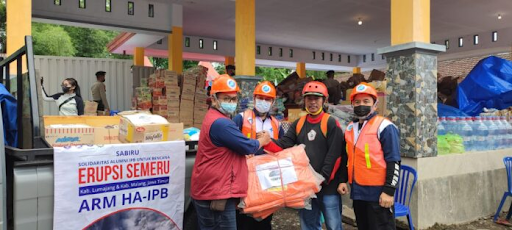
Embroidery Training for Semeru Mount Refugees
IPB University ARM HA Provide Embroidery Training for Mount Semeru Refugees Independent Voluntary Action of IPB University Alumni Association (ARM HA), Regional Executive Board (DPD) East Java HA IPB, and Lumajang Village Social Movement (Gemapalu) has come again for Mount Semeru volcano eruption survivors. Last weekend, they provided embroidery training for Desa Sumbermujur residents.
Training on Emergency Responses
Select an image for which you want to see the achievement of the SDG indicators
RELATED NEWS
It seems we can’t find what you’re looking for.